

Synthetic Phishing: AI-Enabled Insider Impersonation
- NOVEMBER 24TH, 2025
- 2min read
Introduction
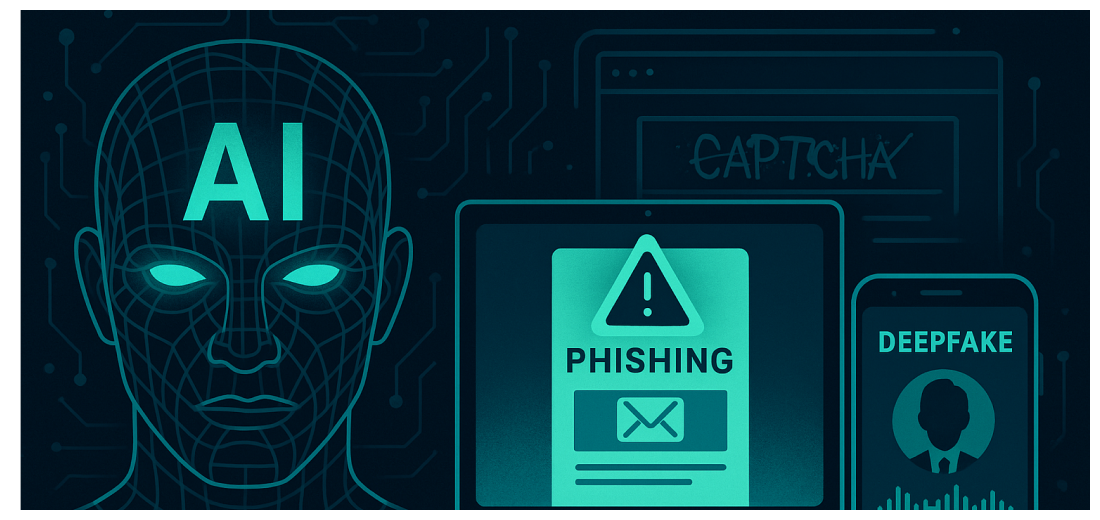
Threat actors increasingly use artificial intelligence (AI) to impersonate trusted individuals such as executives, employees, or suppliers within organisations. These “synthetic insider” attacks may include AI-generated emails, chat messages, voice clips, or videos that appear genuine. The goal is often to obtain money, credentials, or access permissions.
In mid-2025, an impostor used AI to mimic U.S. Secretary of State Marco Rubio, contacting officials via Signal to try to access sensitive information.
How the attack works
- The attacker studies publicly available data (social media, corporate websites) to identify a target organisation’s employees or suppliers.
- Using AI, they generate convincing messages (email, chat, voice) that look like they come from a senior person in the company (for example, “CEO”, “Finance Director”).
- Because the message appears legitimate (“sounds like our boss”, “uses the correct project name”, “comes via Teams/WhatsApp”), the recipient may comply before questioning it.
- The attacker may embed fake approvals, social-engineered dialogues or AI-cloned voices to bypass checks and gain access or cause a financial loss.
How can you protect yourself?
- Pause and verify: For urgent or unusual requests, especially financial or access-related, confirm identity via a known number or in person.
- Check the channel: If a request arrives through an uncharacteristic platform, treat it as suspicious.
- Look for subtle indicators: Slightly odd language, uncharacteristic urgency, unfamiliar links or attachments, or requests to bypass standard procedures.
- Educate employees and users: Ensure everyone understands that impersonation attacks can now leverage AI (voice clones, video, and extremely realistic emails), and that anyone could appear legitimate.
- Report incidents: Contact your IT or security team immediately if you suspect an impersonation attempt.
Keywords
- Primary: synthetic phishing, AI phishing attacks, insider impersonation
- Secondary: AI-generated emails, AI voice cloning, social engineering, phishing prevention, executive impersonation, AI cybersecurity threats
Explore more CIL Advisories

Review Bombing Attacks and Extortion
IntroductionMalicious actors use "review-bombing", a coordinated flood of fake, one-star reviews as an initial step for extortion. This high volume…
NOVEMBER 26TH, 2025
Read More
The Silent Security Threat: Data Hoarding
IntroductionThe greatest risk to your organization may be the sheer volume of data we hold, a practice known as Data…
NOVEMBER 19TH, 2025
Read More
Supply Chain Security: Preventing Software and Hardware Breaches
IntroductionA supply chain attack is an attack strategy that targets an organization through vulnerabilities in its supply chain. These vulnerable…
NOVEMBER 17TH, 2025
Read MoreNever miss a CIL Security Advisory
Stay informed with the latest security updates and insights from CIL.
